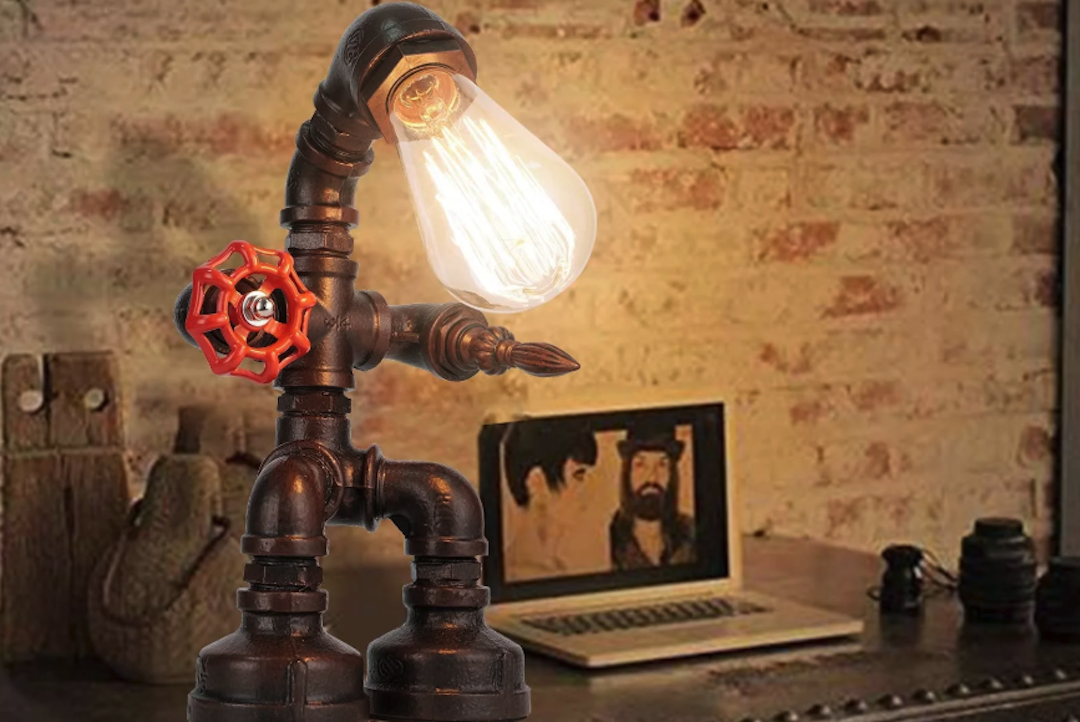
So, you’re curious about the Steampunk Industrial Gear Table Lamp, huh? It’s a lamp that’s a bit of a statement piece, blending old-school mechanics with modern lighting. Think exposed gears, pipes, and a generally rugged, yet elegant, aesthetic. It’s not your average bedside light – it’s designed to catch the eye and spark conversation.
This isn’t just a lamp Guffco; it’s a fusion of eras and styles. The “steampunk” aspect comes from its inspiration. Steampunk often imagines a Victorian-era world, but with advanced steam-powered machinery. So, you’ll see elements that evoke that period: think brass, copper, intricate pipework, and yes, gears that look like they could actually turn, even if they’re purely decorative. The “industrial” part refers to the raw, functional, and often robust look. It borrows from the no-nonsense design of factories and workshops of the past. Combine these, and you get a table lamp that feels both historic and slightly futuristic, all while providing illumination.
The Core Components: More Than Just a Bulb
At its heart, it’s still a table lamp, so its primary function is to provide light. However, the components that make up a Steampunk Industrial Gear Table Lamp are what set it apart.
The Illuminating Element
While some designs might incorporate Edison-style bulbs with their visible filaments (which adds to the vintage charm), others might use more modern LED equivalents housed in similarly styled shades. The choice of bulb can significantly impact the mood and the overall authenticity of the look.
The Structural Framework
This is where the “gear” and “industrial” aspects really come to life. You can expect to see:
Gears and Cogs (Decorative or Functional)
Often, these are the star of the show. They might be layered, interlocking (visually, at least), and made from metal. Some lamps might have actual moving gears, but more commonly, they are static elements designed to mimic the look of machinery. The size and number of gears can vary greatly, from subtle accents to substantial, eye-catching features.
Pipes and Fittings
Think plumbing pipes, but often made of brass, copper, or aged metal. They form the lamp’s structure, its arm, and sometimes even house the wiring. Elbow joints, couplings, and valves (again, usually non-functional but visually accurate) are common. This gives the lamp a very tangible, assembled quality.
Metal Bases and Accents
The base is typically solid and weighty, often made of cast iron or distressed metal. It grounds the lamp and contributes to its industrial feel. Other metal accents, like bolts, rivets, or even small gauge-like details, can further enhance the aesthetic.
Design Considerations: Bringing the Look Together
The real magic of these lamps lies in how these disparate elements are assembled. It’s not just about throwing a bunch of gears and pipes together. There’s an intentional design to create a cohesive and visually appealing piece.
The Art of Assemblage
The way the different components are connected is key. You might see:
Welded and Bolted Construction
Many of these lamps have a handmade or workshop-assembled feel. This can be achieved through visible welds, bolted joints, and an overall sense of robust construction. It’s designed to look like something built for purpose, not mass-produced in a sterile factory.
Layering and Dimension
The gears and pipes are often layered to create depth and visual interest. This makes the lamp feel more complex and intricate, drawing the viewer’s eye to explore the details. It’s like a miniature sculpture that also happens to light up.
Material Choices Deep Dive
The materials used are fundamental to achieving the steampunk and industrial vibe.
Brass and Copper Patina
These metals are frequently used for their ability to develop a beautiful patina over time, or they are deliberately treated to look aged. A polished brass might feel too modern, whereas a brass with a deep, warm patina or a verdigris-like finish screams vintage.
Aged Iron and Steel
For the heavier, more structural elements, cast iron or steel is common. These are often finished to look weathered, with hints of rust or a matte, utilitarian coating. This adds to the rugged, industrial feel.
Wood Accents (Sometimes)
While less common as the primary material, sometimes you’ll find subtle wooden bases or accents. This can add a touch of warmth and a connection to the Victorian era’s use of natural materials in furniture and interior design.
Functionality and Practicality: Beyond the Aesthetics
While the design is striking, it’s still a table lamp. So, how does it perform in its primary role?
Lighting Quality and Intensity
The type of bulb and the shade (if there is one) will determine the light quality.
Ambient vs. Task Lighting
Many Steampunk Industrial Gear Table Lamps are designed to provide more ambient or mood lighting. The exposed bulbs or the way the light is diffused through intricate metalwork might create interesting shadows and a warm glow. If you need a bright task light for reading, you might need to consider the bulb wattage or perhaps look for a model with a more focused shade.
Bulb Types: Filament vs. LED
Edison-style filament bulbs are popular for their retro look, but they consume more energy and can get quite warm. Modern LED bulbs that mimic the look of filament bulbs are a great alternative, offering energy efficiency and cooler operation while maintaining the aesthetic.
Powering Your Piece
The electrical components are usually well-integrated to maintain the design.
Cord and Switch Design
The power cord might be a fabric-covered braided cord, often in a neutral color like brown or black, which blends better with the vintage aesthetic than a standard plastic cord. The switch might be a simple toggle switch, a rotary switch, or even a pull chain, all contributing to the overall theme.
Safety Standards
Despite the vintage look, these lamps are designed to meet modern electrical safety standards. It’s always a good idea to check for certification marks like UL or CE when purchasing.
Where to Place Your Steampunk Industrial Gear Table Lamp
The unique nature of this lamp means it’s not just a utility item; it’s a focal point.
Enhancing Different Spaces
Think about where this lamp would truly shine.
The Desk Sanctuary
On a wooden desk, surrounded by other vintage or industrial-inspired items, it can create a highly atmospheric workspace. It adds character without being distracting.
The Living Room Statement
As a bedside table lamp, it can add a quirky touch to a bedroom. In a living room, it might sit on an end table in a loft-style apartment, a library, or a room with exposed brickwork.
The Commercial Nook
These lamps are also popular in commercial settings like cafes, bars, or workshops looking for a distinctive ambiance.
What to Pair It With
Consider the surrounding décor.
Complementing Materials
It pairs well with natural materials like wood, leather, and brick. A metal lamp might feel out of place in a room filled with delicate pastels and sheer fabrics.
Balancing Contrast
Sometimes, placing it in a more modern or minimalist setting can create a striking contrast, making the lamp stand out even more.
Maintenance and Care for Your Lamp
These lamps, with their intricate metal components, require a bit of specific care.
Keeping the Metal Gleaming (or Grimy)
The finish on these lamps is often designed to look aged, so aggressive cleaning can ruin the intended effect.
Dusting Regularly
A soft, dry cloth is your best friend for everyday dusting. This prevents dust from accumulating and dulling the finish.
Targeted Cleaning
For any grime or fingerprints, a slightly damp cloth might be used sparingly. For brass and copper, specific metal polishes can be used, but be cautious. Test in an inconspicuous area first to ensure you don’t remove the desired patina. Some might prefer to let the metal age naturally.
Avoid Harsh Chemicals
Never use abrasive cleaners, strong solvents, or corrosive chemicals, as they can damage the metal finishes and any decorative elements.
Electrical Component Checks
While the wiring is usually robust, it’s good practice to do a quick check now and then.
Inspecting the Cord and Plug
Occasionally, check the power cord and plug for any signs of fraying or damage. If you find any, it’s best to have it professionally repaired or replaced.
Bulb Replacement Cautions
When replacing a bulb, ensure the lamp is unplugged and allow the bulb to cool down completely if it’s an incandescent type.
Structural Integrity
Given the assembled nature of these lamps, a quick visual check can ensure everything is still secure.
Tightening Loose Parts
If you notice any bolts or fittings that seem loose, gently tighten them. Be careful not to overtighten, especially if the threads are metal-on-metal, as this could strip them.
The Steampunk Industrial Gear Table Lamp is more than just a light source; it’s a piece of functional art that can really define the character of a room.